Table of Contents
The federal government’s dramatic expansion of immigration-focused cooperative policing agreements with state and local authorities (about 1,500 agreements across 40 states) comes against the backdrop of the historic unpopularity of Immigration and Customs Enforcement.
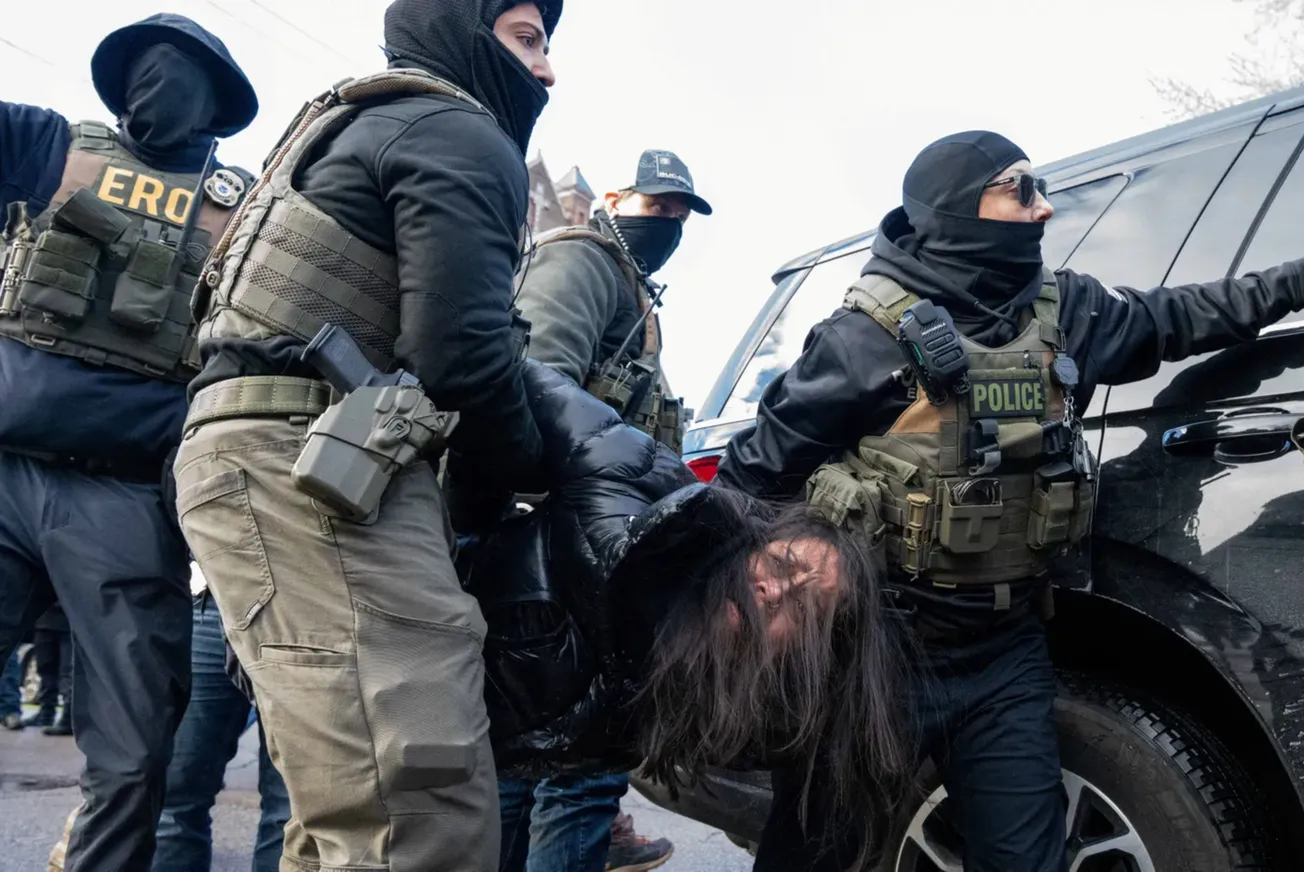
Worse, recent reporting indicates that American citizens are increasingly facing federal assault charges in cities with large immigration crackdowns despite video evidence that regularly contradicts the claims of federal agents.
Educate your inbox. Get the Bluegrass Institute's once-weekly policy update.
It’s time for states to step back and reconsider their cooperation with the feds in this arena and all others when it comes to policing.
The state-federal collaboration campaign undermines some of federalism’s most basic aspects and reduces state control over state police officers.
Yielding police powers to feds is a slippery slope
This comes as many right-leaning state legislatures are now considering requirements that their police departments partner with federal agencies – for instance, through so-called 287(g) or task force agreements – to coordinate law enforcement operations.
The killings of Alex Pretti and Renee Good in Minneapolis, along with other instances of questionable federal behavior (defying court orders, warrantless searches, etc.), should give states pause before signing a substantial piece of their sovereignty over to the federal government.
Both Vice President JD Vance and White House advisor Stephen Miller recently claimed that federal officers have “absolute immunity.”
That’s not strictly true, but it’s close enough that state governments should take heed.
Unaccountable law enforcement poses dangers
Once state officers are imbued with federal authority, the actions they take in the name of that authority are effectively elevated beyond the reach of state law and policy. So state officers who go against their state training or instruction, even flagrantly and intentionally, will be beyond the reach of most state accountability protocols.
For instance, state officers working on federal joint task forces have been held immune from state criminal liability and exempt from state policy requirements like wearing body cameras.
They may also be placed beyond the reach of state residents whose rights they abuse. Take the examples of James King and Hamdi Mohamud. Under different circumstances and in different states (Michigan and Minnesota, respectively), both young people were abused by local police who’d been cross-deputized for federal task force work.
And for that reason, both have spent years fighting for accountability – a fight that continues in King’s case, which is pending on certiorari before the Supreme Court, but a fight that has sadly ended in Mohamud’s, whose petition the nation's highest court denied in March.
This is because federal officers, unlike their state colleagues, are effectively above America’s highest law, the U.S. Constitution. While state and local officers can be held liable for constitutional violations, federal officers cannot.
Red states support states' rights ... until they don't
There is deep irony here for state governments led by Republicans who profess hand-over-heart devotion to federalism and the rule of law. By mandating that their officers submit to federal authority, state lawmakers give up much of their power to hold their own agents accountable to the law.
It's also an expansion of federal power that these otherwise rock-ribbed conservatives would dependably decry in other contexts, from education to energy. Washington clamors for new power, regardless of which party holds the reins, and the authority that states surrender is not easily won back.
For local and state police agencies, the challenge that these compelled partnerships present is more practical. When federal agents violate the rights of Americans, the local cops who have partnered with the feds may lack a strong incentive to act in accordance with state laws they‘ve sworn to uphold.
In other words, a local police officer may find herself deciding whether she should protect and serve her local constituents or Uncle Sam.
The bottom line is that after states enter into these agreements, it doesn’t matter that state tax dollars are paying officer salaries, issuing their badges or supplying their equipment. Once the federal government has a state signature on its federal contract, the state loses substantial control over its own police. Many state governments and officials have found this out too late.
We both represent organizations that work to push back against federal overreach and reserve a broad range of authority to states. The framers of our Bill of Rights understood that policing is largely local, and keeping that authority where it belongs should be a consistent priority for anyone who cherishes liberty.
So, before Republican-run states sign over sovereignty to purchase perceived safety, lawmakers should note that maybe-future-President Gavin Newsom is smiling with the thought of all the commonsense gun control or environmental mandates he can enforce through the partnerships forged today.
Caleb O. Brown is the CEO of the Bluegrass Institute. Patrick Jaicomo is a senior attorney at the Institute for Justice and one of the leaders of its Project on Immunity and Accountability. He represents Mr. King and Ms. Mohamud.
This piece first appeared in USA Today.