
Table of Contents
The Declaration of Independence’s pledge of liberty to all people was only effective if there were those willing in subsequent generations to fulfill that promise. It was not yet a matter of fact in 1776. Liberty required champions—often obscure and endangered—who forced the promise into practice. Within a generation of the founding, Kentucky gave the nation one of the most fearless of them.
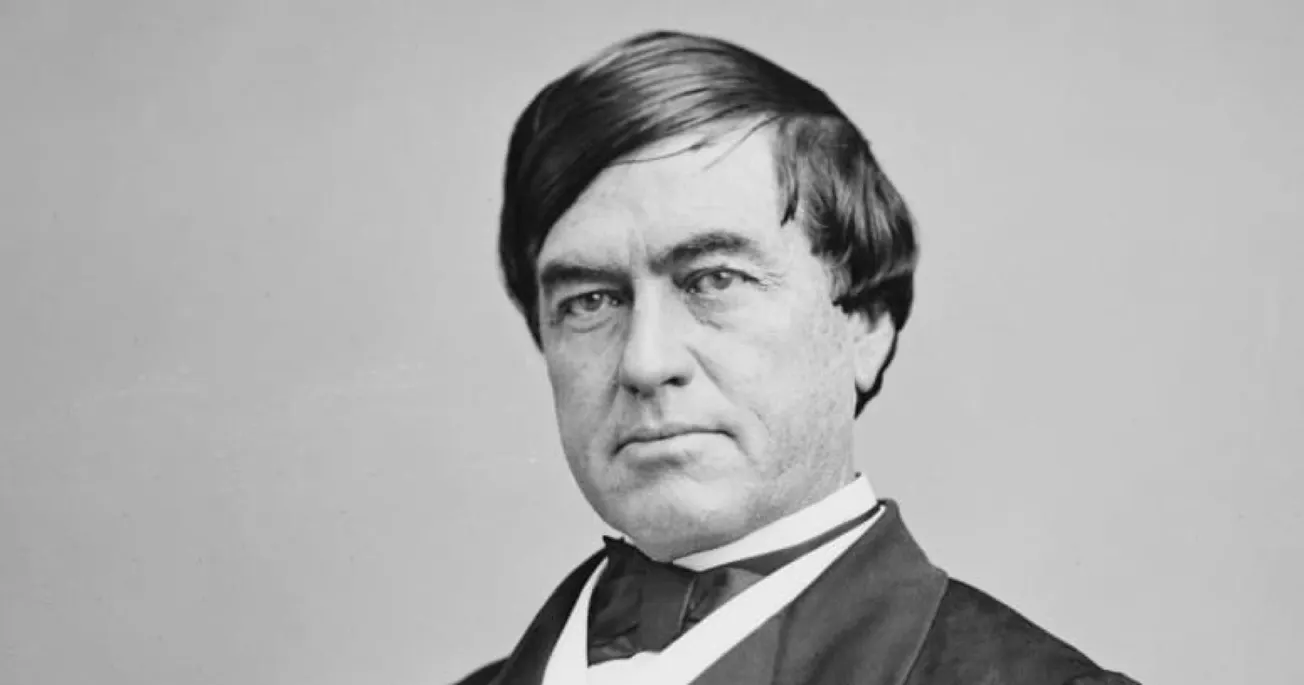
Cassius Marcellus Clay didn’t fit the mold of an abolitionist firebrand. He was born into great wealth. His father, Green Clay, was a Revolutionary War veteran, a settler of Kentucky, a surveyor, a delegate in both the Virginia and Kentucky legislature, and a representative to the Virginia Ratifying Convention for the U.S. Constitution—and a prominent slave owner.
The younger Clay was surrounded by slavery as a child. His initial objections to the institution were on economic grounds more than moral concerns. This was especially emphasized as he traveled to study at Yale University, where he could clearly see the contrast in economic prosperity between a free state and a slave state like Kentucky.
Educate your inbox. Get the Bluegrass Institute's once-weekly policy update.
After hearing William Lloyd Garrison speak at a church near Yale, Clay engaged himself fully as a fierce and fearless opponent of slavery, and he brought the fight home to the front lines of Kentucky.
Clay’s encounter with Garrison also solidified another instinct he held, whether he realized it at the time or not. Free and open dialogue was the key to defeating such a powerful institution as slavery. If people were free to debate and engage in open discourse, as Garrison did during his lectures and through the Liberator, the defense of slavery would be revealed as shallow and antithetical to the principles of the American founding.
Clay returned to Kentucky in 1832 and found himself in the state legislature by 1835. Alongside Robert J. Breckenridge, Clay was slavery’s most vocal opponent in the Kentucky House of Representatives. He boldly denounced it as evil—“morally, economically, physically, intellectually, religiously, politically—evil in its inception, in its duration, and in its catastrophe.”
As Clay continued to force the issue of slavery on Kentuckians, he left politics in 1841 and entered directly into the arena of ideas. He reveled in the opportunity to debate slavery, in spite of the increasingly common episodes of violence that the issue provoked.
In 1843, at a public debate, Clay barely survived an assassination attempt. A hired gunman, Samuel Brown, shot him in the chest, aiming at his heart. He only survived because, as Brown approached, Clay quickly withdrew his Bowie knife, raising his silver-tipped sheath in the bullet’s path by doing so. A bloody brawl resulted, and Clay slashed Brown’s nose in two and removed one of his eyes. For his part, Clay thought he was mortally wounded, but walked away with a mere red mark over his heart. It was a gruesome affair, but friend and foe alike now understood that Clay would not be intimidated or coerced into silence.
Clay grew in his defiance against the slavocracy and the mob alike. In June 1845, he started an anti-slavery newspaper in Lexington called The True American. He received death threats almost immediately. He received one letter calling him “meaner than the autocrats of hell” and warning that his life “cannot be spared. Plenty thirst for your blood—are determined to have it.” Rather than discarding the note, he publicized it, intending to show the depravity of the slave power.
Clay was constantly armed by this point with two pistols and his trusted bowie knife. He also bought two brass four-pounder cannons and armored the doors of the press to keep the mobs out. In August, he published an incendiary editorial entitled “What is Become of the Slaves in the United States?” The public was completely outraged and called for the True American to cease publication. On August 18th, after obtaining a court injunction against the paper, a mob of 60 seized and dismantled the press. Clay, suffering from typhoid fever at the time, was too sick to stop it.
Despite this setback, Clay was not deterred. By October, he reopened his press in Cincinnati and still edited the paper in Kentucky. It continued operation for the next two years. He also used the incident as one of the clearest examples of how slavery is incompatible with a free, constitutional republic. “For they did well see,” remarked Clay in reflection of the incident, “from a brief experience, that slavery and a free press could not live together.” August 18th marked the day that “the Constitutional liberties of Kentucky [were] overthrown; and an irresponsible despotism of slaveholding established in their ruins.”
Clay’s name would continue to grow in prominence throughout the nineteenth century. Though never to the level of his cousin, Henry Clay, he went on to serve in the Mexican-American War, the Civil War, and as Ambassador to Russia. He was even considered as Lincoln’s Vice President in 1860. He lived the life of a fighter, always prepared to defend the principles of liberty as he understood them.
Today, Cassius Marcellus Clay is remembered mostly for his commitment to the cause of emancipation. It’s an appropriate legacy to honor. But it’s equally appropriate to honor Clay for his commitment to and understanding of the principles of free speech. Today, as we navigate our own challenges to free speech, we should heed Clay’s fearless example.
Bluegrass Institute scholar Caleb Franz is the Program Manager at Young Voices, and the author of The Conductor: The Story of Rev. John Rankin, Abolitionism’s Essential Founding Father.