Table of Contents
Every July 4th, Americans light fireworks, wave flags, and sing songs. This year, we do all of that and more: the nation turns 250, a milestone grand enough to demand something beyond the usual celebrations.
So here is a question worth sitting with this weekend: What holds us together? Not what should hold us together in theory, but what actually does. What shared inheritance, what common story, what sense of mutual obligation binds 340 million people into something we can still honestly call one nation?
Our national motto offers a clue, and a challenge. E pluribus unum: “from the many, one.” The Founders borrowed the phrase from a Roman poem, but they made it their own. They knew, as well as anyone, that the “many” they were working with was already deeply diverse: thirteen fractious colonies, competing economic interests, regional loyalties, and profound disagreements about the new nation’s soul.
What made “unum” possible was not uniformity. It was a shared formation, a common set of texts, stories, principles, and heroes held in common memory and transmitted, generation by generation, through deliberate civic education.
That transmission has broken down. Americans increasingly inhabit not just different political camps but different epistemic worlds. We do not merely disagree about conclusions, we disagree about premises, about history, about what the founding was and whether it deserves to be honored at all. The fracturing is cultural before it is political, and it runs deeper than any election can fix.
Two failed responses have dominated our public argument about this crisis. The first insists that the founding was so irredeemably stained by slavery and conquest that nothing essential about it is worth recovering, that the honest American story is primarily a story of oppression, and that “patriotism” is little more than a cover for power.
The second responds with an uncritical nostalgia, demanding a return to a golden age that was never quite as golden as remembered, and dismissing every inconvenient complication as revisionism.
Both responses, in their different ways, sever the connection between memory and hope. They leave us either with a past too poisoned to learn from, or a past too sanitized to tell the truth about. Neither produces citizens capable of self-governance. Neither is remotely adequate to the complexity of the American story.
What we need instead is what the best civic education has always aimed at: an honest reckoning with both the gifts and the failures of our inheritance, what the political philosopher Patrick Deneen has called “temporal continuity,” a felt-presence of past and future in the present. Not nostalgia or condemnation, but the kind of engaged memory that allows a people to say: where we came from is good, these are the principles we have repeatedly failed to live up to, and this is why it still matters that we try.
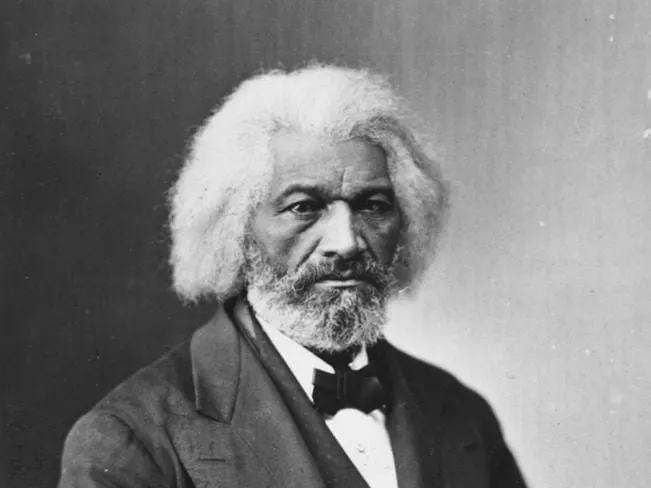
The classical tradition in education has always understood this. Students who read the Declaration of Independence alongside Frederick Douglass’s 1852 speech, “What to the Slave is the Fourth of July,” encounter the full, honest tension of the American experiment: founding principles magnificent enough to indict the nation’s own failures, and a tradition flexible and self-correcting enough to survive those indictments.
Educating students that way is not indoctrination. It is formation. And it is precisely what e pluribus unum has always required.
America at 250 does not need a verdict on whether our country is good or evil. It needs citizens who actually understand our founding, who know enough of the story to both love it and argue with it honestly. A republic of people who share nothing but grievances, or nothing but myths, cannot long govern itself.
The fireworks are beautiful. But the harder and more necessary work, the work of forming citizens who can sustain a republic, happens in classrooms, at kitchen tables, in books read slowly and argued over freely.
That work is never finished. At 250, it is more urgent than ever.
This piece originally appeared in the Bowling Green Daily News.